

Issue #8: What is the rarest thing you can own?
In this edition: Ford Model-T, assets, thinking liabilities.

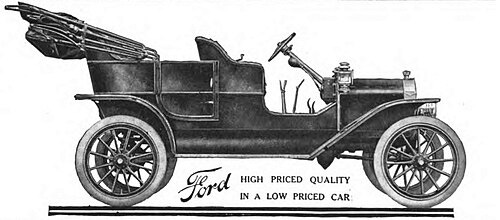
In 1908, Henry Ford did something that confused his workers, and horrified his competitors. He broke the construction of a car into 84 distinct steps, assigned each step to a specific person, and ran all simultaneously, on a moving line. The Model T that once took 12 hours to build now took 93 minutes.
In essence, this forty four year old man had industrialized intelligence, by decomposing every complex decision about how to assemble a car. At this point, the it became unnecessary for the craftsman to hold the whole car in his head. Ford had made something abundant, the knowledge required to assemble a car. As a result, the advantage was having taste, knowing what to build next, what customers actually wanted, and the distribution to get it to them.
Some craftsmen understood this and adapted, but others faded away because they kept sharpening skills the market no longer needed.
We are living through the same moment again.
Intelligence Is No Longer the Bottleneck
Innovative thinking used to be expensive, limited in supply and slow to replicate. In fact, for most of human history, expertise was concentrated in people who spent years acquiring it. Lawyers, doctors, analysts, engineers, writers, all made you pay a premium for their intelligence.
Today, AI has directly changed this arithmetic. At marginal cost, or no cost, a model can draft a contract, synthesize a research paper, generate marketing copy, write production code, and explain a medical result, all in seconds. The underlying intelligence, pattern recognition across large domains, is becoming abundant in the same way Ford made car assembly abundant.
Does this does not mean intelligence is worthless? Not quite. It means it is no longer the scarce input that commands premium prices. And in economics, when something that was once scarce becomes abundant, the value migrates upstream to whatever remains scarce.
According to Washington Times, companies are discovering this the hard way after moving too quickly from “AI can assist this work” to “AI can replace this work,” only to find the gaps in quality, oversight, and decision-making that no model fills.
The question most people ask though is: where do humans still add critical value?
Klarna replaced 700 customer service workers with an AI assistant, claimed it handled two thirds of all customer queries, then reversed course entirely when customer satisfaction dropped. Lol. The CEO admitted: “We focused too much on efficiency and cost. The result was lower quality, and that’s not sustainable.” What Klarna discovered is customers actually wanted assurance that a human was available if things got complicated, NOT faster resolution of routine queries. Basically, a trust, not intelligence problem. And trust is not something you can generate at scale with a language model.
IKEA faced a similar moment when it automated around 50% of its phone calls, leaving 8,500 employees at risk. Instead of letting them go, the company retrained them as interior designers, using AI tools to assist. That retrained workforce became the fastest-growing revenue stream IKEA had. The intelligence of interior design is partially automatable. The judgment of what a specific customer actually wants in their home, and the trust built in that conversation, is not.
The HR Digest identified roles seeing the highest rehiring rates across industries. Boomerang Employee, the title includes mid-level managers, customer success directors, & quality assurance specialists. The connective tissue roles that require emotional intelligence, cross-departmental negotiation, and an intuitive understanding of a client’s unspoken needs. These are roles that require the most discretion.
Since intelligence is abundant, what are the future skills?
Here’s a list of competences you need to prepare for, and scale through, stay relevant in the AI-enabled world:
Judgment. The ability to make good decisions in conditions of ambiguity, with incomplete information, under real consequences. Models are calibrated on past data. Judgment operates on present context that no training set fully captures.
Original observation. The ability to notice something true about the world that has not yet been documented. Models are trained on what humans have already written. The frontiers of knowledge, the genuinely new observations, still come from humans in the world.
Trust. Relationships, track records, reputations built over time with specific people. A model can produce a persuasive argument. It cannot be your client’s trusted advisor. That position belongs to a person who has shown up consistently over time.
Distribution. Access to audiences, communities, and networks built on genuine relationships. The ability to get ideas in front of people who will actually act on them is not a function of intelligence. It is a function of years of earned attention.
Taste. The capacity to make aesthetic and strategic choices that resonate, to know what is good before the data confirms it. This is the rarest of the scarce inputs and the hardest to replicate, because it is formed by a lifetime of exposure, failure, and refinement that no model has lived through.
To remain relevant, you have to get what AI cannot replicate at scale.
You need a track record of good judgment in your specific domain. Original observations from direct contact with the world. You need trust that has been earned over time. Access to communities that pay attention to you specifically. Your point of view has to be so distinct that your output is recognizable.
Remember, those that resisted the assembly line were irrelevant in the Ford era, but the few that understood the shift followed scarcity, and were rewarded with immense benefits. Same thing with the Fax Machine → Computer era, the typewriter too.
Maybe you should learn from them. In fact, we all should, because AI is getting all the more intelligent, and we cannot compete solely on that. We should be adapting, engaging experiences to sharpen our future skills.
Sources & Good Reads:
The AI Boomerang Effect: Robert Half Talent Survey, 2026
Klarna Reverses AI Hiring Freeze: Bloomberg, May 2025
IKEA Retrains 8,500 Workers: Robert Half / AZ Family, April 2026
Gartner: 50% of AI-driven layoffs to be reversed by 2027