
Issue #6: Yes, AI is Bias, just like YOU.
In this revised edition: Can you get the best results without compromising your safety?

As humans, we all have favourites.
Perhaps because of past experiences. Maybe trauma. Maybe the resources people spend on us. Maybe the special way certain individuals make us feel or the role they have played in our lives.
Bias, favouritism, and even nepotism are almost inevitable.
Yet, throughout history, these very tendencies have broken relationships, weakened institutions, and slowed the progress of societies.
Guess what?
Artificial Intelligence are no different, because these systems learn from our decisions, our data, and our systems. So, in more ways than one, AI inherits our imperfections, and amplify them
What AI Bias Looks Like
Dynamic Pricing: Different users can receive different prices or offers based on behavioural and demographic signals. Personalisation can quickly become discriminatory when users are treated unequally without justification.
Predictive Judgement: Imagine predicting that you are unlikely to finish this article because people with similar profiles historically disengage from technical content. The prediction may be statistically informed, yet entirely wrong about you as an individual. Obviously because you are gonna finish it, aren’t you??
Systemic Discrimination: An AI credit risk assessment system assigns higher risk scores to people of color due to biased historical data, leading to unfair denial of loans or higher interest rates.
Privilege Bias: A student performance prediction system predicting a poor performing student would pass just because he/she has a comfortable life.
Socioeconomic Misinterpretation: A scholarship recommendation system denies a deserving student solely because the algorithm misinterpreted socioeconomic indicators, like the ownership of two [damaged] cars, as a sign of wealth.
Geopolitical Profiling: Picture an AI agent attending to VISA Applications. It denies a qualified upright Nigerian thanks to biased weighting of the negativity and fraudulence tied to the country online.
AI Ethics: Troubles Today & Tomorrow
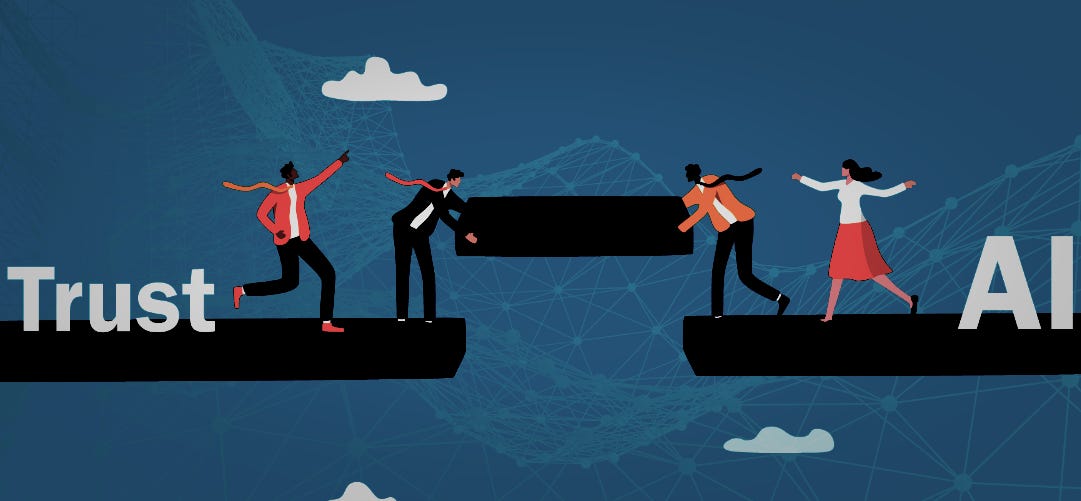
Not too long ago, Accenture‘s Responsible AI team led by Arnab Chakraborty put together a report on the subject matter. It showed that at the time, only 35% of consumers have faith in AI systems and agents.
Honestly, that level of skepticism is not surprising.
1. Privacy & Personalization Paradox
In the bid to make products and solutions more tailored to the needs of users, companies and AI enthusiasts have a great mount to scale, PrIvAcY.
How do AI producers meet customer needs without infringing on their individual rights?
How will vibe coders really satisfy the guidelines of the many structural adjustments and laws like the GDPR, NDPA and the likes?
With the increase in personalisation [Lol Meta AI just sits in your WhatsApp and you love it?], what are the existing constraints from the user standpoint?
2. The Transparency – Complexity Dilemma
The part of AI and its process that cannot be explained is known as a black box. It takes in input and returns output with the consumer oblivious of the inner workings of that process and decision-making.
Here, customers have no clue how the components of agents, models & systems function under the hood.
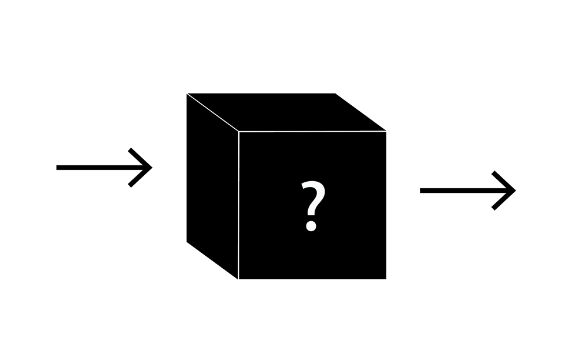
We thought transparency would lead to predictability, turns out its implications may have been misunderstood. This is because, while outcomes are more predictable when cloaks are removed, there are a couple of benefits that largely outweigh downsides:
Reduced risks and uncertainties
Outlined regulations and awareness of regulatory bodies
Company Culture, Agility in the Market, and Relationships with customers & stakeholders. Even when competitors replicate innovative AI products, they can never carbon-copy the relationships, agility, and culture built by the trailblazers.
CAR-power, as I call it. Hehe
3. Bias & Fairness Conundrum.
As we well know, good and bad is subjective. Even so, it can be dangerous for machines to drive in the wrong direction at certain instances. According to SG Analytics, minimising bias is criticial for AI to reach its full potential.
Why?
Artificial Intelligence is not far off the reality we so interact with.
In fact, research has repeatedly demonstrated that bias can emerge across domains, including healthcare. Studies have shown that predicted race from mere chest scans in ways that even clinicians cannot readily explain.
As a result, building fair systems requires intentionality, with bias mitigation as part of the design, not an afterthought.
4. Autonomy - Control Trade-off
AI and its numbers aren’t the supreme solution to life as we know it.
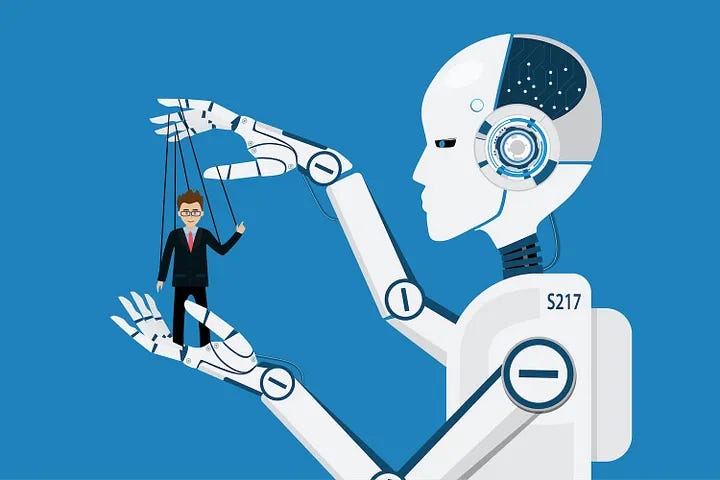
As agents grant me more “autonomy-as-a-service”, how much of the responses, results processes is controlled by the producers, whether for my benefit, to align with ethical principles, to exercise their authority or just for the sake of it?
Quoting Francesca Tabor :
The notion that increasing AI autonomy could undermine human autonomy emphasizes the need for careful consideration and governance of AI systems to ensure they complement rather than compromise human autonomy.
5. Reliability & Safety Issue
Can systems can serve the best results without really compromising my safety?
Today, there is the need to create agents and assistants that excel at multitasking. Trust me, with AGI, Artificial General Intelligence, on the rise, such desires are not dying down soon. The call for more ethical systems couldn’t have come louder than right now.
Even at that, do these systems we always have to lose resourcefulness and usefulness to keep you and I safe?
Welp . . .
[As for reliability, we know for sure that AI should not be used to train itself.]
Yes, considerable work has been done to make AI safer, but the challenge is persistent, and the more powerful systems become, the more critical safety engineering and governance become
But, Are We at Fault?
To get it right, we must do well to ask ourselves:
Can bad AI really be fought against?
Can it be controlled?
Are we, the humans at fault?
A quick recap, in this piece, you have learnt some of the dilemmas that come into play when considering the creation of AI agents and systems. In essence:
We have to wake up to Ethical AI by Design, just like Privacy.
For more on my exploration on the subject, keep your eyes peeled for my next article where I would share insights into how Explainable AI (X-AI) is shaping up. I would also be telling of my discoveries about the Adversarial world.
Until next time, I leave you with this profound truth:
In God, we trust and obey, for AI, we trust but verify.
Gbam!!
Trust God, verify AI